
The Boeing 737 MAX vicissitude has become one of the most controversial in the history of commercial aviation.
On 29th October 2018 in Indonesia, Lion Air flight 610 crashed shortly after take-off from Jakarta airport causing the death of all 189 passengers on board. Some months after, under similar circumstances, also Ethiopian Airlines flight 302, after taking off from Addis Ababa in Ethiopia.
The two disasters led to the deaths of 346 people and generated serious concerns in the air transport industry. As a consequence, the Safety authorities worldwide imposed the grounding of all commercial flights operated by MAX aircraft from the 11th of March 2019.
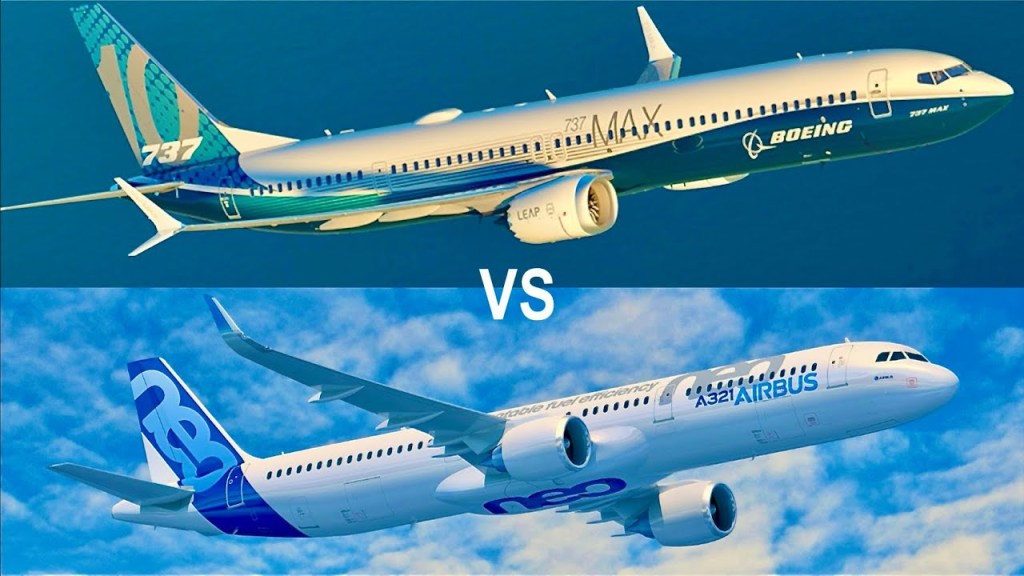
To better understand some of the reasons behind these two crashes and how Boeing lost control of the situation, we need to go back some years and evaluate the development and the birth of this 737 MAX project.
On 1st December 2010, Airbus, which is the largest European plane manufacturer and Boeing’s major rival, launched the Airbus A320 NEO project, its newest narrowbody aircraft. The A320 NEO family line, promised to provide the most efficient and versatile aircraft types in the 160-240 seat capacity aircraft market, threatening Boeing’s sales of the B737 NG (Next Generation). At first, Boeing claimed that the B737 NG could easily keep up with the new A320 NEO. However, at the Paris Air Show in 2011, the A320 NEO raised impressive interest from airlines, with the commitment of 667 orders and options.
As a consequence, Boeing realised that they had to develop a new version of their B737s, later named B737 MAX, to contrast Airbus’ sales and maintain their market share.
Project issues
Boeing had to rush to retain its customer base, trying to offer a modern and efficient product, although the development conditions of the project were not similar to Airbus.
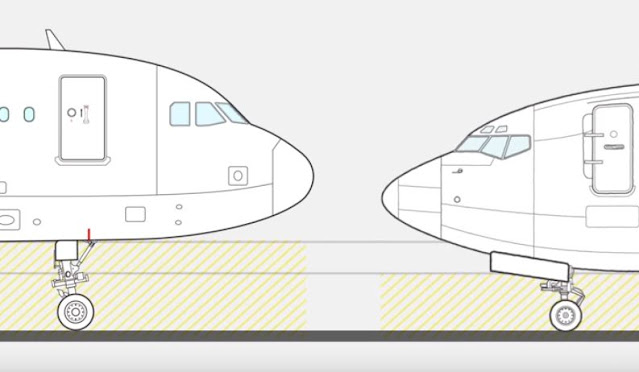
On his side, Airbus had the advantage of having a more recent fuselage, as a starting point to develop the project: the A320 CEO (Current Engine Option), realised at the end of the ’80s. In contrast, the B737 project dates back to over 50 years ago (the first flight was in 1967), when Aeronautical technology was at an early stage.
The main difference between the two aircraft is the height from the ground, with the A320 being significantly taller than the B737. This feature played a key role in the aircraft structure since it could allow the instalment of larger engines, providing more efficiency and reducing fuel consumption. Whilst Airbus did not have any problem equipping its aircraft with larger engines, Boeing had to realise some structural modifications, due to the proximity to the ground of the fuselage.
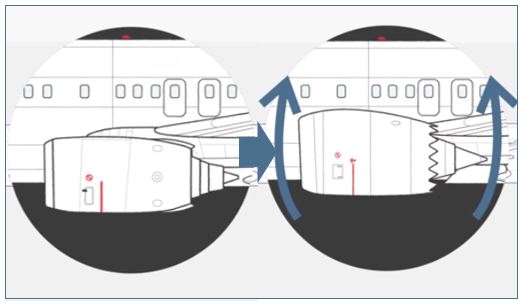
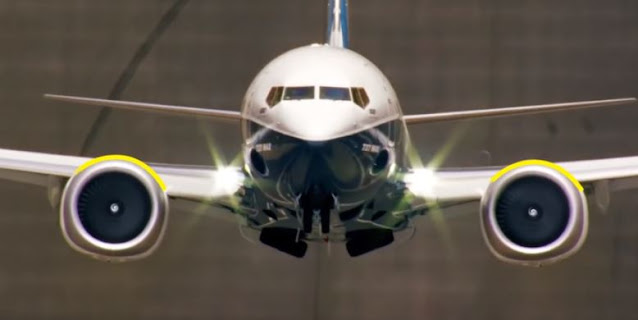
The American manufacturer rose the location of the engines in the wing, in order to obtain the space needed to install the new generation of engines.
Nevertheless, this solution modified the aerodynamics of the wing, as a result, during the climb phase and maximum thrust of the engines, the aeroplane led to the risk of stalling (a condition that leads to the loss of lift, which makes the aircraft fly).
MCAS system
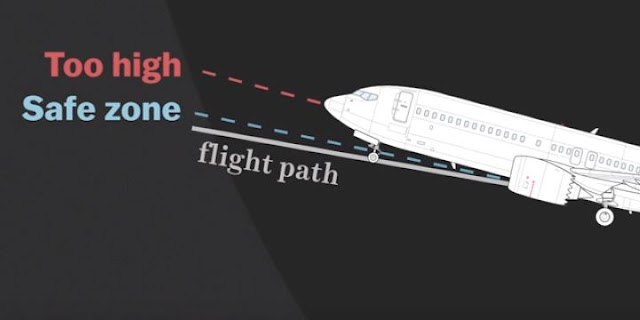
Boeing, to cope with these new issues, introduced the MCAS system (Maneuvering Characteristics Augmentation System), which corrects the angle of attack of the aircraft and it keeps it to the correct inclination.
In simple words, when the sensors detect a too-high angle to the wing speed, they “pull down the nose of the aircraft” to reach the correct angle. However, the existence of this software was not disclosed to the pilots, since Boeing pretended to realise a new plane variant without any difference from the previous version from the cockpit point of view.
The problem that occurred with the two aircraft crashing was the activation of this system during the take-off phase, which led the aircraft to be out of control, pulling down the nose of the aeroplane to the ground.
In both circumstances, due to the low altitude, the pilots were not able to regain control of the aircraft and avoid the crash.
B737 MAX orders
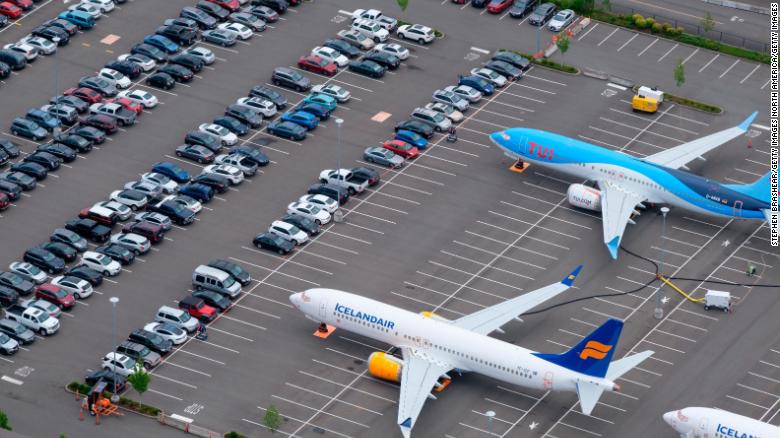
The B737 MAX has become one of the most popular aircraft worldwide since its launch, committing 1491 orders. Even after its grounding Boeing has slowed down but not halted the MAX assembly line, being confident in the aircraft’s return to service. However, it had to store the aircraft built in every possible space, including its employees’ car park at the production facilities.
At the beginning of 2020, the American manufacturer temporarily stopped production for some months, due to the shortage of parking spaces and the Covid-19 health crisis. At that time Boeing stated that they would have needed up to 18 months for the delivery of the aeroplanes built. Nevertheless, some airlines which ordered the MAX flew for bankruptcy (e.g. Jet Airways), so they would have to look for alternative customers.
Consequences in Italy
Two Italian carriers, Air Italy and Neos had been impacted by the B737 MAX grounding.
In particular, Air Italy chose the 737 MAX as its flagship for its short-haul expansion plan. When the grounding occurred the Italian carrier had already received 3 of its 20 aircraft on order. The grounding of the three aircraft and the impossibility of receiving other examples were some of the main causes that led Air Italy to its closure (the MAX grounding cost 17 million euros in less than one year to Air Italy).
In contrast, Neos scheduled to receive its first B737 MAX (4 on order in total) during 2019, so they were forced to replace those aircraft with other B737 NG.

Subsequent developments
On 30th November 2020, the FAA (Federal Aviation Administration) released the airworthiness certificate to the aircraft, allowing the resume of commercial operations of the type. Likewise, also the other worldwide Aviation regulators signed off the MAX return to commercial operation. It is expected that several airlines will return to use the aircraft by the Summer of 2021. Many airlines confirmed their interest in the MAX and placed additional orders for the type. For instance, in Europe, Ryanair decided to further invest in this project and ordered 75 additional aircraft (B737 MAX total order: 210). On the other hand, Boeing is already considering to realise the successor of the Boeing 737 MAX, which would take its place in 2030. After all, the 737 has become a historic aeroplane, flying for over 53 years with 4 different generations: first series (B737-100, -200), classic (B737-300,-400,-500), Next Generation (B737-600, -700, -800 e -900) and MAX (B737-7,-8,-9,-10).
Some rumours reported that Boeing was developing the project NMA, also known as 797, as a successor to the outdated B757 and B767. Currently, it may seem that there will be a complete redefinition of the project, and these resources will be employed for the studies for the MAX successor.

 Flymoreandbetter