The Air Transport industry is shaped by an evident phenomenon: airlines are becoming increasingly split into two polar opposite sides, the low-cost carriers and full legacy service ones. Organisations must adapt to consumers’ needs, looking either for the lowest price or willing to pay extra to receive an enhanced service. The quotes of O’Leary (CEO of Ryanair, Europe’s largest low-cost airline) and Al Baker (Qatar Airways CEO, named the best world airline in 2022) perfectly highlight the distance between the two sides of the industry.

Qatar Airways Al Mourjan lounge in Doha
(O’Leary, 2012)
“Are we going to say sorry for our lack of customer service? Absolutely not”
(Al Baker, 2018)
“The sky is a wonderful place to be”
Thus, full-service airlines charging their tickets over the average need to provide a state-of-the-art product to attract and retain their customers, especially those flying in premium cabins. Nevertheless, passengers’ experience begins at the airport hours ahead of take-off time, and legacy carriers’ aim is to stand out from the competition by providing access to premium travellers to their flagship lounge.
Flagship lounges
Flagship lounges are handled by major full-service airlines and they are usually available in airports in which the carrier develops the hub & spoke model. For instance, considering Qatar Airways, whose major hub is Doha Hamad Intl Airport, we can both first and business-class dedicated flagship lounges. Since this kind of lounge has to host a large number of passengers flying through the airport, they usually feature considerable spaces and several internal areas, such as buffet areas, sleeping rooms and sometimes even unique perks such as saunas. For instance, in Paris Charles De Gaulle Airport there are several Air France flagship lounges and the one located in terminal 2E Hall L gates provides its premium passengers with the chance to enjoy free facial treatment and the spa experience.
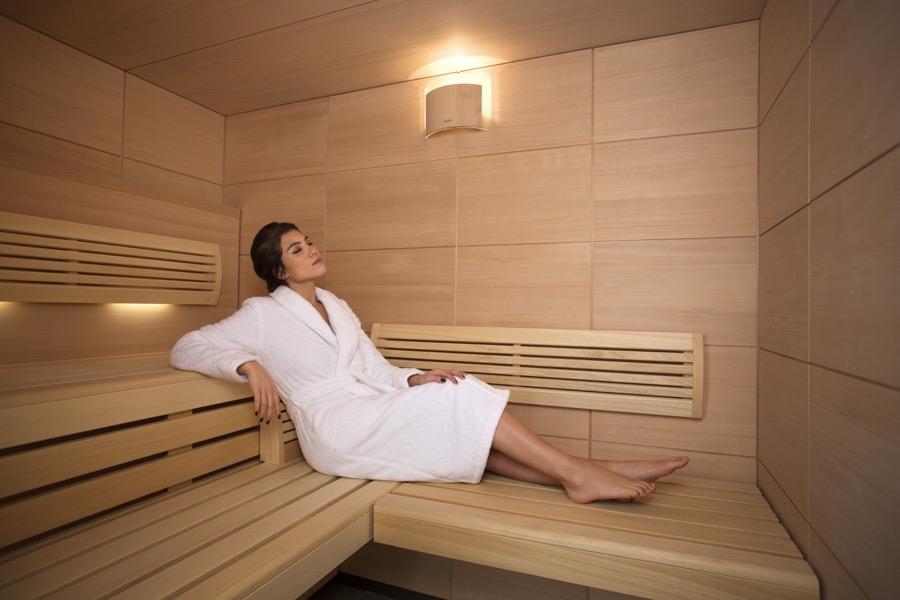
The Air France business class lounge in Paris CDG terminal 2E offers a free sauna experience to its passengers
On the other hand, if an airport is considered a key base by an airline, it may host a flagship lounge as well, which can be either used exclusively by the carrier’s passengers or it can be shared with other operators. For instance, in Milan Malpensa airport a passenger can find Emirates and Lufthansa flagship lounges. In particular, Emirates operates three daily flights to Dubai and one to New York (JFK), so it makes sense for them to run their own lounge. While Lufthansa’s lounge is used by all the carriers belonging to Lufthansa’s group, including Austrian Airlines, Brussels Airlines, Eurowings and Swiss. As a consequence, with several daily flights in Milan, the premium passenger volumes justify the need for a dedicated lounge for the group.
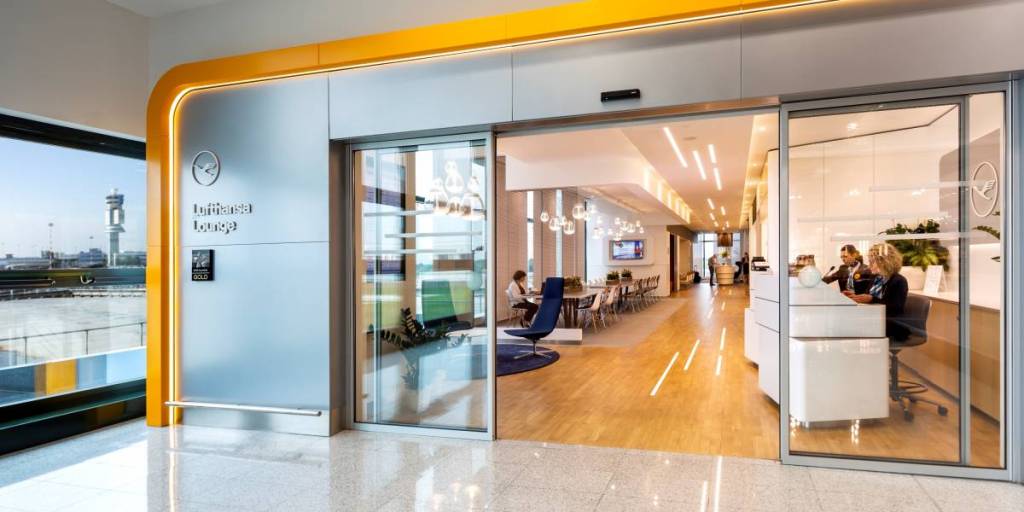
Lufthansa business class lounge in Milan Malpensa airport- Non-Schengen area
Lounges handled by the airport operator’s company
In the majority of worldwide airports, there are at least one or more lounges handled by the airport operator, which are made available to passengers and airlines. Generally, the lounge can be accessed by travellers holding both business and first-class tickets, or economy-class passengers holding frequent flyer status or Priority Pass members. In particular, the Priority Pass programme can be related to certain credit card perks, providing free access to airport lounges.
The lounges handled by the airport operators are the most common since they let all the airlines affiliated that operate in the airport rely on this area and offer this type of service to their premium travellers. Eventually, these lounges are chosen by the carriers that operate just a limited number of flights to the considered airport. Depending on the airport and the size of the lounge, they can feature a buffet area, a business centre, and showers.
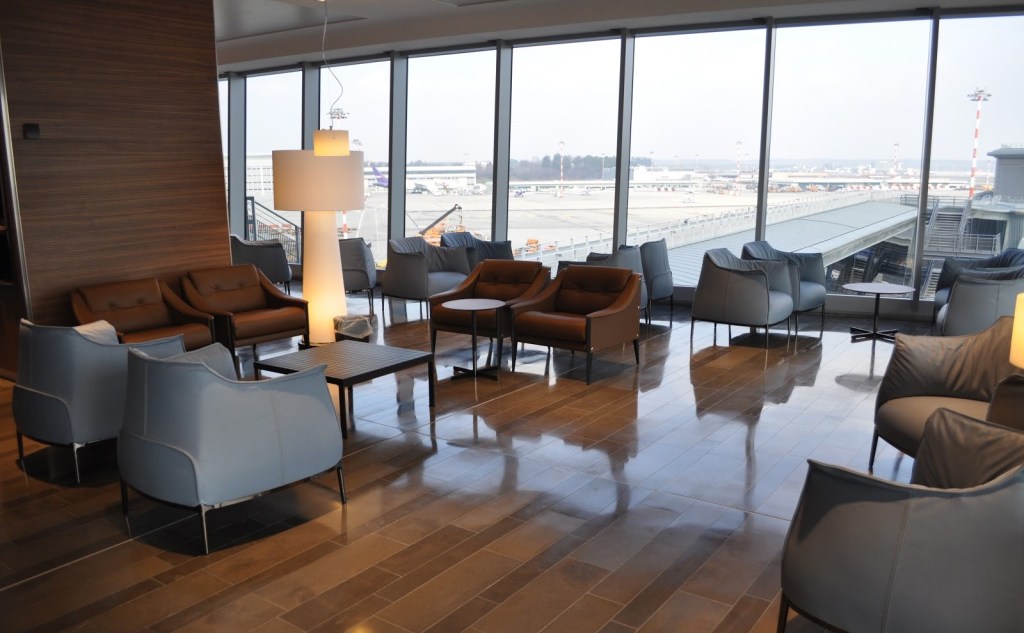
Milan Malpensa Montale Vip Louunge- Extra schengen terminal
 Flymoreandbetter