
Which are the most dangerous airports in the world? Is it safe to fly from there?
These are some of the most compelling questions asked by passengers, who are either worried about flying or just interested in flying to remote airports. Despite many rumours, there is no straightforward answer, since it is extremely hard to evaluate airports’ characteristics in terms of operating challenges employing a universal ranking method.
Generally speaking, the risk is measured through the number of incidents that occurred over a determined period, analysing the fatalities number. Besides, risks are driven by several geographical and meteorological factors, such as changeable and adverse weather conditions; airports’ location; and airports’ landing systems (like the ILS system). The airports described below feature at least one of the mentioned characteristics.
Lukla Airport (Nepal)
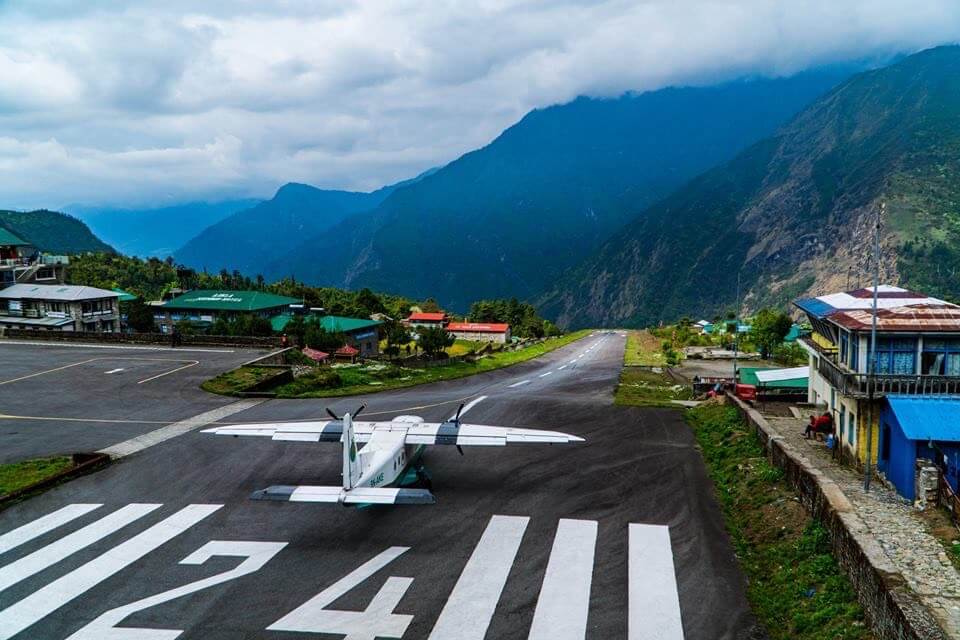
Lukla airport runway
Lukla airport lies at the bottom of Everest mountain at an altitude of over 2800 meters. The 527-meter long runway is realised in asphalt, featuring 20 meters of width and a 12° slope to favour both landing and take-off. Due to the lack of instrument approach procedures and radio assistance, the airport can be reached under the rules of visual flight. The airport operates almost exclusively small turboprop aircraft, like Dornier and De Havilland aircraft which connect Katmandu (the capital of Nepal) in roughly 30 minutes. The long history of crashes in this airport makes it one of the most dangerous worldwide. For this reason, only over-experienced pilots are allowed to land, in particular, those who have already completed successfully 100 landings and takeoffs in similar airports.
Sao Paulo Congonhas (Brazil)

The 35L, Congonhas’s most challenging runway
Congonhas is Sao Paulo’s city airport and it is the second busiest in Brazil (after Sao Paulo Guarulhos), having handled roughly 22 million passengers in 2019. The airport is located in the heart of town, just 8 km far from the city centre, for this reason, the Brazilian Aviation Authority set a limit of hourly movements (maximum 30 takeoffs and landings an hour). From Congonhas, there are exclusively domestic services available, operated by just 4 airlines with narrowbody aircraft. Besides, the airport is well-known in the aviation world for its demanding take-off and landing procedures that caused many crashes over the years. One of the most tragic fatal incidents occurred in 2007 with the runway excursion of a TAM Airlines Airbus A320. The crash caused the deaths of 200 people including passengers, crew and some employees working in TAM’s headquarters at the end of the runway.
Saint Barthélemy (Caribbeans)

Saint Barthélemy Caribbean island hosts one of the most legendary airports in the world. The runway is just 680 meters long and it is located in a narrow valley surrounded by steep hills on three sides and its head ends directly on the beach. During the approaching phase, the pilots have to reduce the engine power and turn down the nose of the aircraft, as they have to fly over a hill located next to the runway. In the airport, some regional carriers operate, which fly up to twenty daily flights to St Maarten with turboprop aircraft.
Funchal (Madeira)
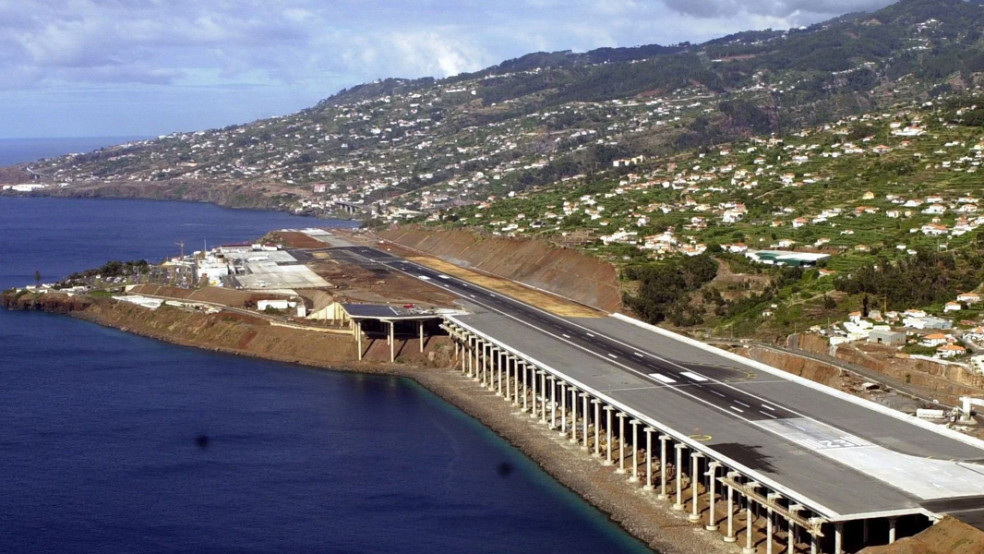
Funchal airport, located in the remote Madeira island, is famous for its runway featuring strong winds powered by air streams generated by the Atlantic Ocean on one side and the mountains on the other. The runway was extended to 2780 meters in the early 2000s, following some crashes that occurred during the previous decades. In particular, in 1977 a Boeing 727 of TAP Air Portugal had a runway excursion causing the death of 131 passengers and crew (out of 164 occupants). Due to the orographic shape of the territory, the runway was extended with a bridge structure that ends on the adjacent promontory, resulting in an outstanding engineering masterpiece.
Gibraltar Airport (UK)
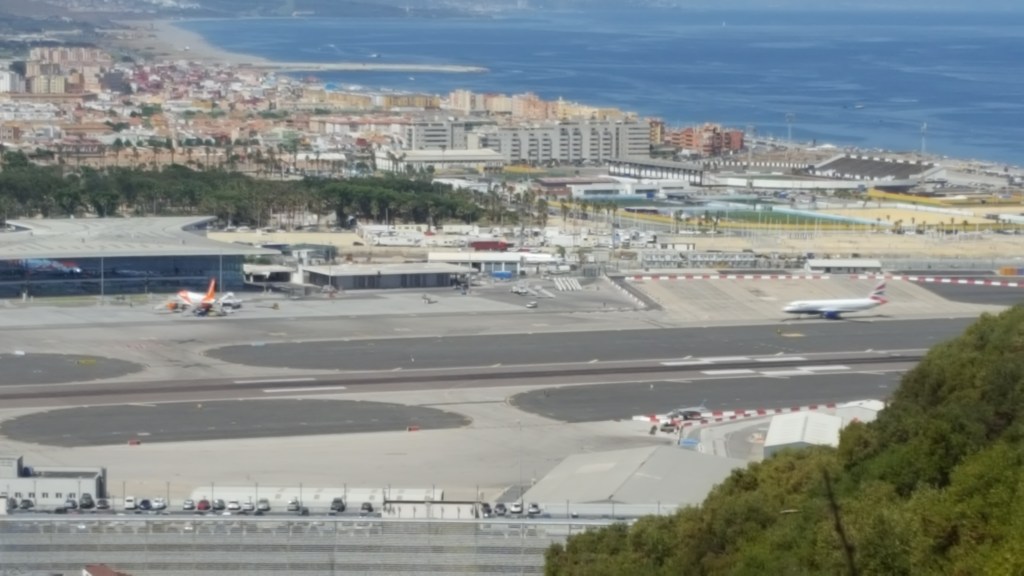
British Airways and EasyJet Airbus A320s in Gibraltar airport
Gibraltar airport is undoubtedly one of the most unique in the world, as its runway is crossed by “Winston Churchill Avenue”, the road connecting the British territory with the Spanish one. When an aircraft is going to land or take off, the road is closed to traffic by lowering barriers. Shortly after, a special airport vehicle clears any FOD (foreign object debris) that may have been left by pedestrians and cars when they crossed the runway. Nevertheless, the airport hosts a limited number of daily flights, with just two airlines currently operating: British Airways and Easyjet.
 Flymoreandbetter