
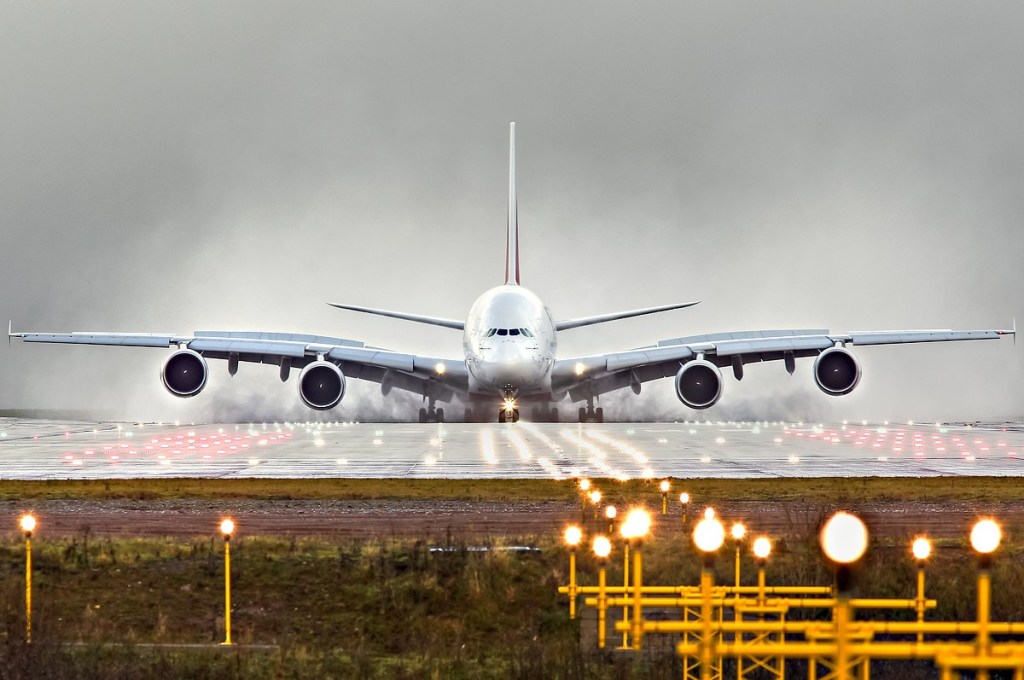
With global air transport flows ultimately above pre-pandemic levels, the Airline Industry targets a new record for 2024, setting exciting scenarios for the near future of Aviation. Unsurprisingly, the consolidated growth of passenger demand has been a key driver to Airbus A380’s return to service. Carriers had to deal with the increasing traffic flows and constant delays in the deliveries of newly manufactured aircraft, thus this challenging environment led many airlines to reactivate all their aircraft in storage, including the costly-operating A380s.
Current A380 operators
The 2020 Air Transport crisis forced airlines to take several critical decisions and redefine both their mid-term and long-term strategies, should they definitively retire the A380 jumbojet or keep it in long storage?
Whilst carriers such as Air France and Thai Airways decided to phase out the aircraft to offset costs arising from the Pandemic, other airlines such as Qantas and Emirates opted for a long-term operation of the aircraft, besides they planned the retrofit of its interiors to keep up with technology updates in terms of IFE and cabin equipment introduced by newly built aircraft manufactured both by Airbus and Boeing.
As of mid-2024, there are 10 airlines still employing the Airbus A380 worldwide, and they include Emirates (the largest operator with a whopping 116 aircraft in its fleet and 7 already retired), Singapore Airlines (12 active and 12 retired), British Airways (all 12 A380s are active), Qantas (10 active and 2 stored), Korean Air (9 active and 1 stored), Lufthansa (8 active and 6 stored), Qatar Airways (8 active and 2 stored), Etihad Airways (6 active and 4 stored), Asiana Airlines (all 6 A380s are active) and ANA (all 3 A380s are active).

Being simultaneously loved by passengers and a headache for airlines running it
The Airbus A380 represents the 21st-century milestones achieved by Aviation Industry, which was able to deliver a unique aircraft able to revolutionise commercial air travel. The Airbus A380 provides an enhanced travel experience, thanks to its large galleys and increased seat width and pitch in economy class. Furthermore, some of the airlines operating the A380s installed even onboard lounge bars and showers for first and business-class passengers.
The double-decker aircraft was designed to satisfy growing passenger demand in large airports, featuring considerable traffic flows and limited slots availability (such as London Heathrow and Dubai). According to Airbus, carriers could have benefited by operating aircraft equipped to carry as many as 800 passengers, as they could boost the seat capacity without increasing the number of flights. Nevertheless, the manufacturer did not carefully consider all the features that the A380 held and the implications arising from operating an aircraft of such a tremendous size. Furthermore, airlines operating the A380 have to deal with the aircraft size (its wingspan is 80 meters long) which is not allowed to land in several airports, due to runway limitations in terms of length and width. Besides, airports had to redesign parking stands and even terminals to host the A380s, this implied more expensive parking and landing fees for the A380 calculated on its maximum take-off weight. Finally, the A380 can be economically sustainable only on certain routes with high traffic levels, as it can carry as much as double amount of passengers compared to a regular widebody aircraft and features two additional engines, which increase fuel consumption.

Bottom line
Undoubtedly from a passenger perspective, the A380 represent one of the most comfortable ways to travel, thus it is essential to monitor the A380s operations in carriers’ fleets to choose a flight featuring the aircraft and benefit from its facilities and perks as long as it will be flying.
 Flymoreandbetter