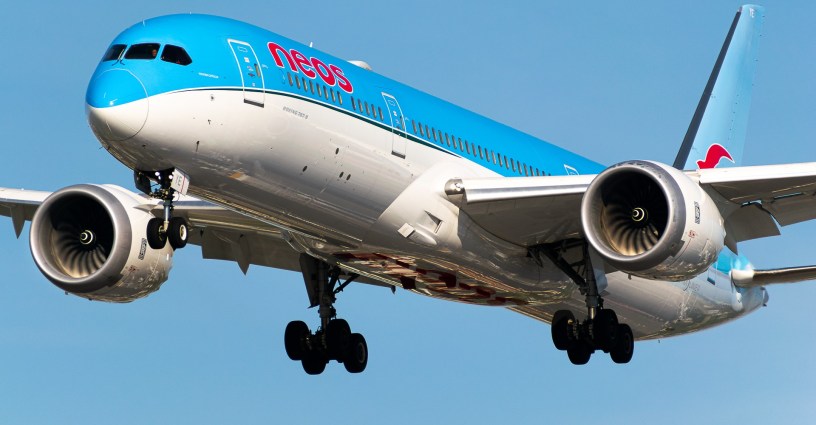
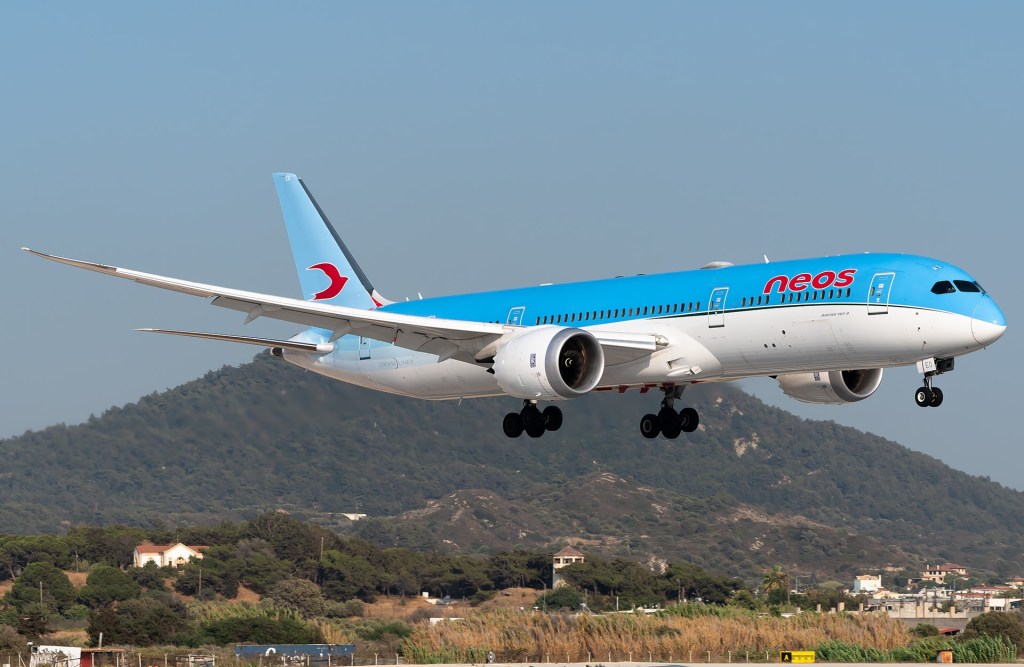
Neos is Italy’s second-largest airline operating an extensive network to several leisure destinations, Asia and North American cities. The carrier is an outstanding example of how Italian resilience can overtake any challenge in the ever-changing environment of the air transport industry.
The airline’s headquarters are located in Milan Malpensa airport nearby, which represents its main operating base, where the carrier offers both long-haul and short-haul services. Besides, Neos flies through the majority of Italian airports, and provides long-haul services from Rome Fiumicino, Verona and Palermo.
Airline’s fleet
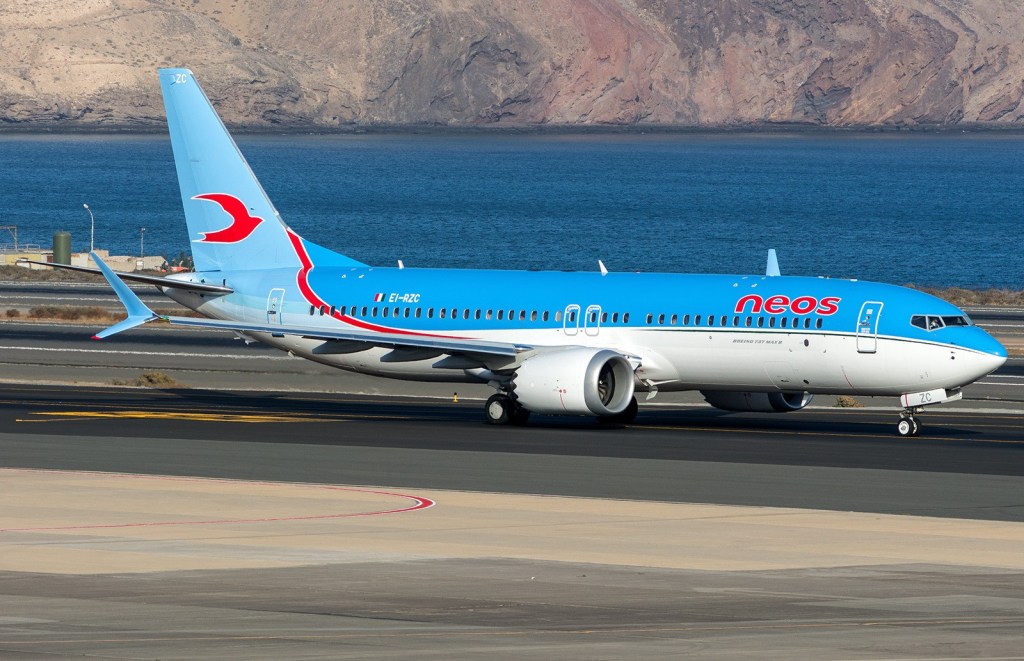
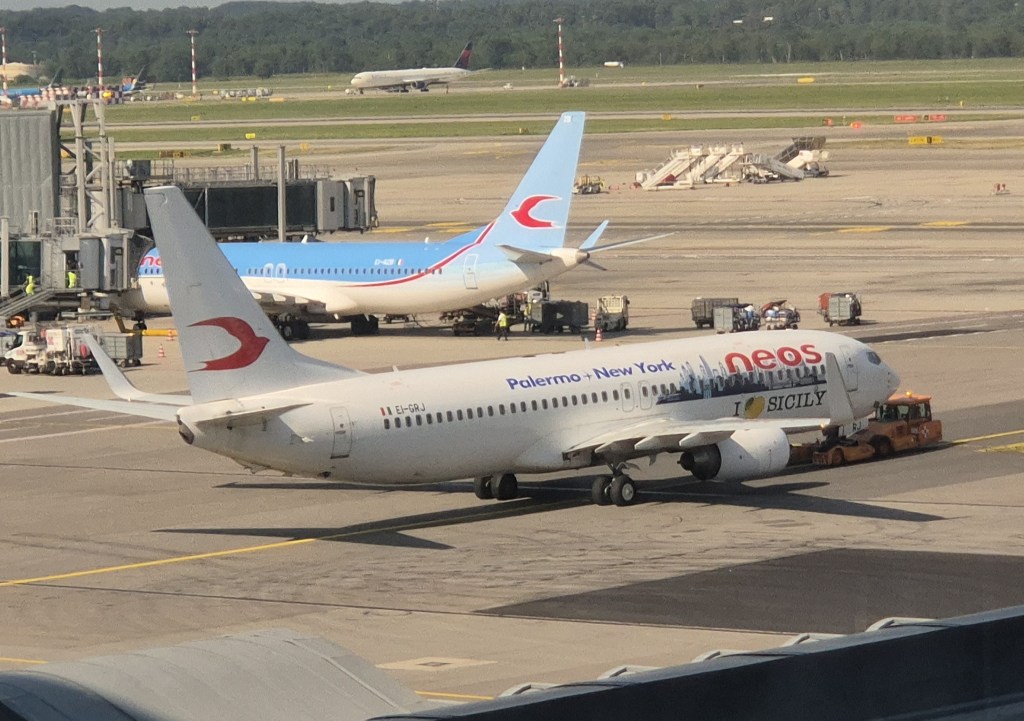
The Italian carrier features a state-of-the-art fleet including 6 Boeing 787-9 in total and 10 B737s (5 B737-8 and 5 B737-800 NG) operating both long-haul and medium/short-haul services.
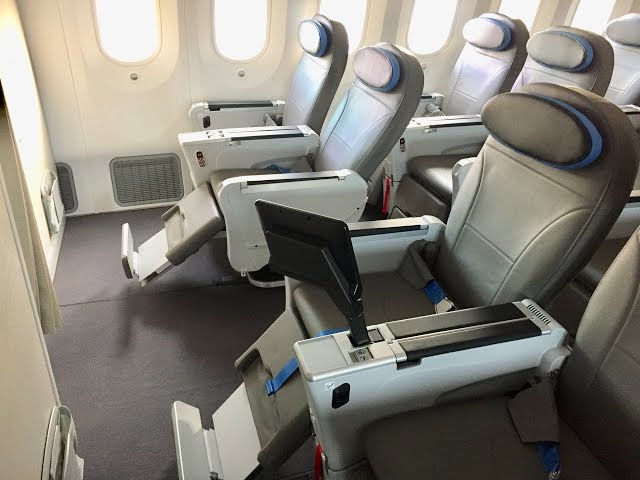
Neos’ Boeing 787s provide 355 seats, 28 in premium economy (arranged in a 2-3-2 configuration) and 327 in economy class (laid out in the standard 3-3-3 configuration). All the B787s are equipped with wifi and an IFE system for every seat.
Considering the Boeing 737s, the Italian airline implemented a consistent fleet upgrade, replacing the ageing aircraft with the modern B737 MAX (3 to be delivered by the end of 2025). Each aircraft features 186 seats of economy class laid out in the standard 3-3 configuration.
Thanks to a comprehensive fleet, Neos can operate the B787 and B737 as complementary aircraft on medium and long-haul routes. For instance, when traffic demand does not require the capacity of the larger B787 (such as flights from Milan to Almaty; and from Bergamo and Verona to Amritsar) the carrier operates the B737 MAX. In contrast during peak season, the B787 might be used for services from Milan to Rhodes and Hamburg.
Core business
Established in 2001, thanks to the partnership between the German TUI group and Italian tour operator Alpitour, the Neos commenced operations in 2002 with a single Boeing 737-800. The carrier’s core business has always been focused on charter flights to popular holiday destinations.
Nevertheless, the airline evolved over the years, despite the air transport crisis provoked by the Covid-19 pandemic and the subsequent drop in holiday travels, Neos overcame this challenging period with their funds and consolidated their operations once the market recovered. The airline succeeded in implementing a revision to its market positioning, which led the carrier to increase the amount of its legacy flights. There is no wonder why, as of 2024, Neos is the only charter carrier operating in Italy, with its former competitors Blue Panorama Airlines and Air Italy/Meridiana, recently terminated their operations.

Market strategy
Over the last few years, Neos proved to be a pioneer in launching new long-haul services from Italy, as the carrier began to fly both to popular destinations such as New York and Toronto and to niche markets such as China, India and Kazakhstan. The airline successfully intercepted the existing traffic flow and draining passenger demand thanks to its reputation and brand awareness.
Neos gradually increased its fleet and expanded its medium and long-haul network, thanks to the development of partnerships with several overseas tour operators which led to the launch of charter flights in multiple countries (e.g. flights departing from Poland, India, etc.). Besides, the airline boosted its legacy operations in several Italian airports, such as Palermo with the launch of the direct service to New York JFK.
Therefore, it is essential for Neos to further develop its legacy operations, enhancing its feeder system between its operated services that is currently limited to specific markets such as Kazakhistan and India. With the reinforcement of its network and the implementation of further connection options among its currently served destinations, the airline could successfully launch new routes from its hub in Milan Malpensa airport.
Bottom line
Neos overcame the challenges faced over its twenty-year history and held its strong position in the Italian market. However, the air transport industry showed that economy of scale is essential for airlines to boost their operations, reduce fixed costs and eventually overcome traffic crises (IAG, Lufthansa Group and Air France-KLM are clear examples of this reality in Europe). Thus, Neos should take advantage of its assets and the current positive outlook in the aviation market to develop strategic synergies with major legacy carriers and foster its organisational structure.
 Flymoreandbetter