Ticket prices are the key drivers of the air transport industry, as they shape airlines’ market positioning, brand identity, and influence their profitability. Whether it is a low-cost carrier or a legacy airline, airlines must deal with fixed and variable operating costs (including employees, aircraft mortgage or lease costs, airport taxes and fuel prices) and make operations profitable. To attract enough passengers to maximize the capacity of their planes and break even, airlines need to leverage efficiency to contain costs to keep ticket prices competitive.
Low-cost medium-haul services
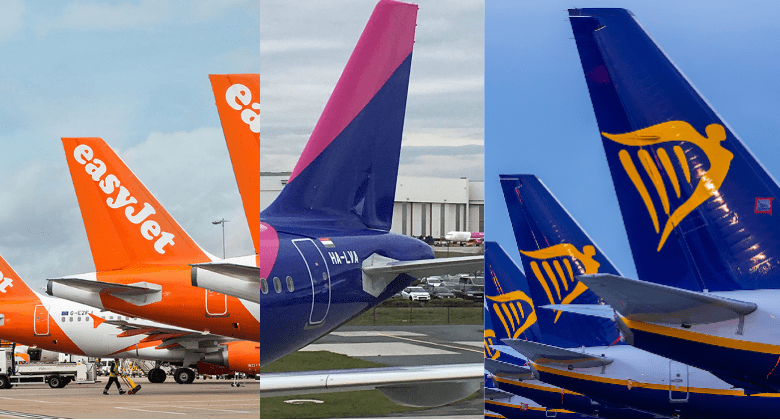
In Europe, there is fierce competition between airlines, with three major airline groups (Ryanair, Easyjet and Wizzair) looking to further the reach of their brands into foreign markets. Over the last few years, travellers benefited from the price dumping of airlines, whose tickets could just cost €4.99 one way for an inter-European medium-haul flight. Even in 2019, before the Covid-19 pandemic and the energy crisis provoked by the Russian-Ukrainian conflict, many airlines filed for bankruptcy following pricing dumping, as they were selling tickets lower than their operating costs. Pricing a one-way ticket for an inter-European flight for less than €50,00 is not sustainable over a long-term period as taxes may account for higher value. For instance, considering a flight from Milan Malpensa to London Heathrow, the airport taxes account for over €68,01 (comprising Italy’s Council City Tax, Embarkation Tax, Passenger Service Charge, Security Tax, Air Passenger Duty and Passenger Service Charge), thus it is unlikely to find a ticket for less than €70,00.
Nevertheless, airfares are complex and difficult to define and simplify, as they are mainly driven by demand and capacity. Therefore, ticket pricing follows multiple dynamics that imply forecasting algorithms and booking trends.

Long-haul services
Long-haul flight tickets are more likely to experience larger price fluctuations, as they imply further factors and fuel cost has more impact due to the larger distance covered, directly influencing the final selling price. Besides, low-cost carriers operating long-haul services are a minority compared to the whole market, since widebody aircraft are far more costly to operate rather than the narrowbody planes employed on medium-haul flights from low-cost carriers.
Therefore, the competition among airlines is mainly focused on the flexibility they can provide to passengers, flying multiple weekly or daily flights from their hubs and developing an extensive network to offer convenient connecting flights. Airlines charge higher prices for point-to-point direct flights rather than flights with one or more stops that involve long waiting stopover times at airports which are less likely to be chosen by passengers.

Booking insights
Some people believe they do not have to rush to purchase a flight ticket, since prices may decrease over time, depending on the day of the week you are checking them. This belief has no basis, the sooner you purchase the flight the less it will cost. If you check the same flight on multiple days, the ticket price might slightly decrease over time; however, if you need a return flight, the advantage of purchasing a cheaper outbound flight might not offset the increased price of the inbound. For instance, the launch price you may find for an Easyjet flight from Milan Malpensa to Paris Charles De Gaulle a year before your travel date might be €35 one way. Looking for the same flight over the months the price may decrease to €20, thus you may think that if you keep monitoring the flight you may pay less than the original price, however, likely, the inbound ticket price has consistently increased. Thus, the sooner you book the better it is.

One way or return?
Whilst low-cost carriers do not charge any extra if you purchase one-way tickets, legacy airlines are used to apply additional costs if you do not buy a return ticket. Through online booking platforms, we can notice that buying one-way tickets may result in being more expensive rather than buying return fares. Thus, even if you do not need the inbound flight or you are planning to fly back with another carrier, you have better purchase a return solution and then cancel the second flight.

Bottom line
Prices are likely to grow day by day, thus when you are planning to purchase a flight ticket and you already decided the period to travel you should book as soon as possible. Anyhow, it is worth knowing that during off-peak seasons (e.g. February and November) it is easier to find convenient deals even close to the departure date.
 Flymoreandbetter