The Airline of the Primates
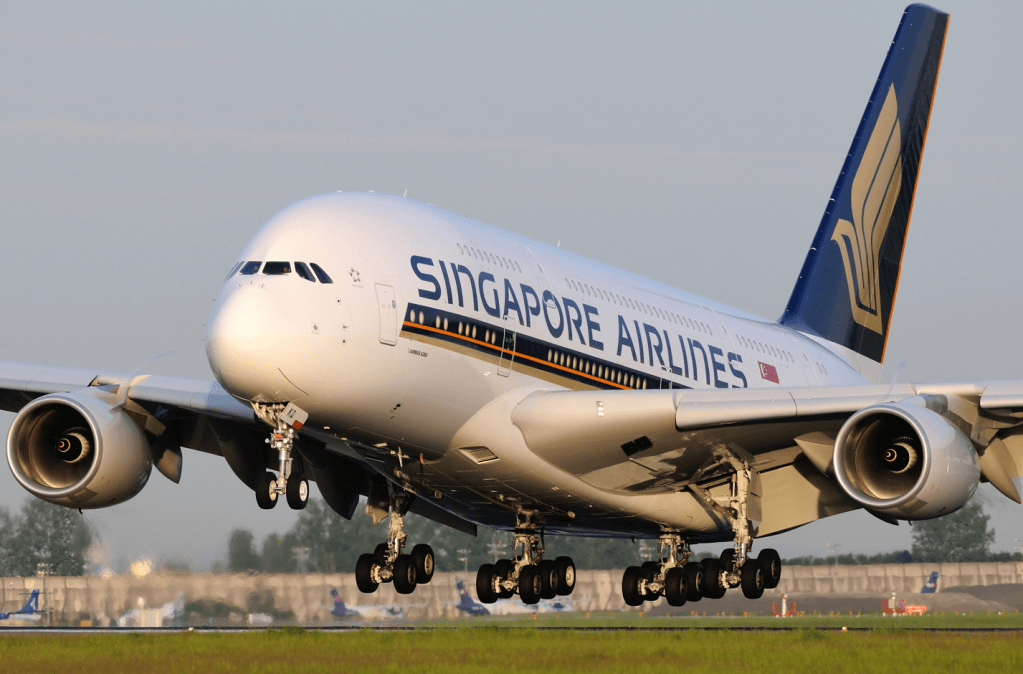
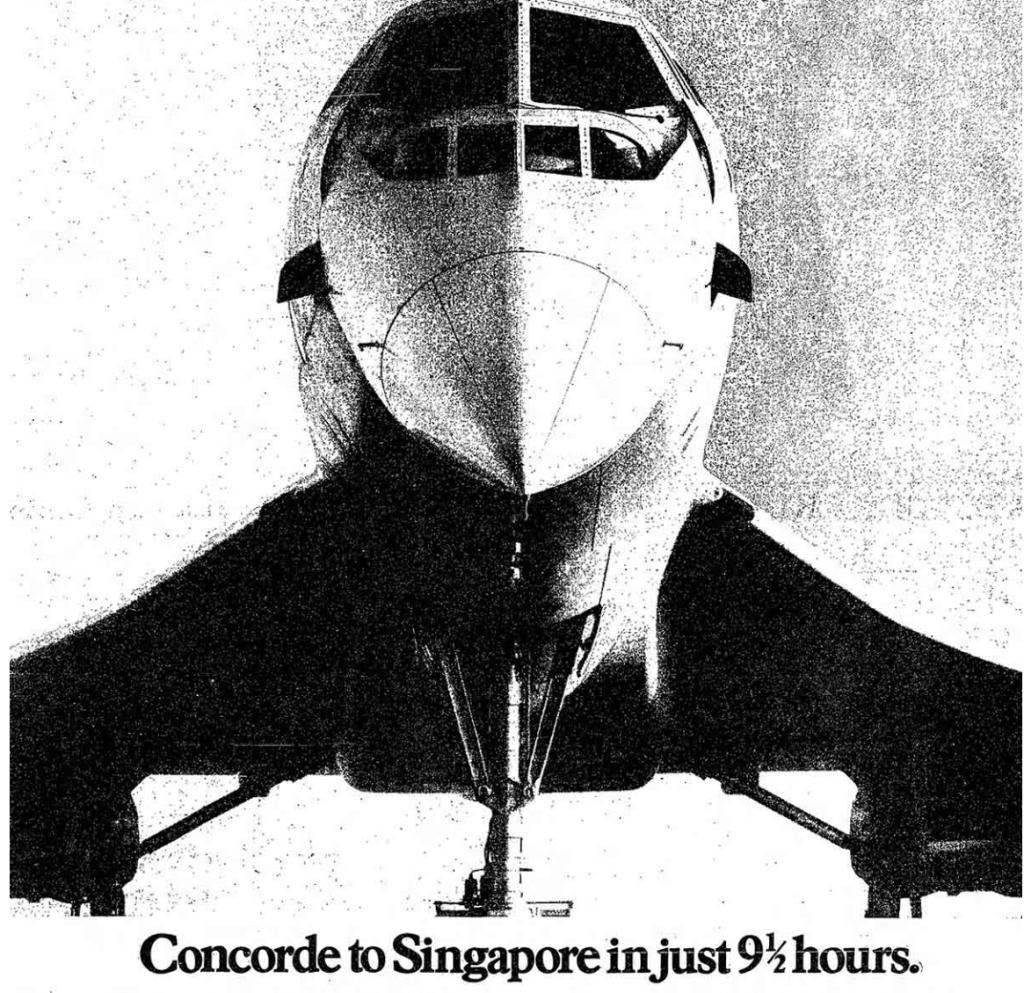
The first airline to take delivery of and operate the double-decker king of the skies, the Airbus A380, the pioneer of enclosed First Class suites, the only carrier to operate non-stop flights of more than 18 hours with the ultra-long-range Airbus A350, and one of the select few airlines to have flown the legendary Concorde.
These milestones tell you everything you need to know about Singapore Airlines: an airline that has consistently pushed the boundaries of commercial aviation. An airline of records.
Airline’s fleet
Singapore Airlines operates a modern, state-of-the-art fleet made up entirely of Airbus and Boeing aircraft, spanning everything from the Boeing 737 family for shorter routes to the iconic four-engine Airbus A380, deployed on some of its most prestigious long-haul services.
The airline’s fleet is predominantly composed of widebody aircraft — a reflection of Singapore Airlines’ role as a major long-haul carrier. Yet these aircraft are also deployed on medium- and shorter-haul routes, offering passengers an experience that is uncommon among many of its competitors. Until the mid-2010s, the Airbus A330-300 was the smallest aircraft in the fleet; at 63.6 metres long, however, it would still rank among the largest aircraft operated by many other airlines. True to its upscale positioning, Singapore Airlines’ cabins are generously appointed, with significant portions of the aircraft dedicated to First Class, Business Class and Premium Economy.
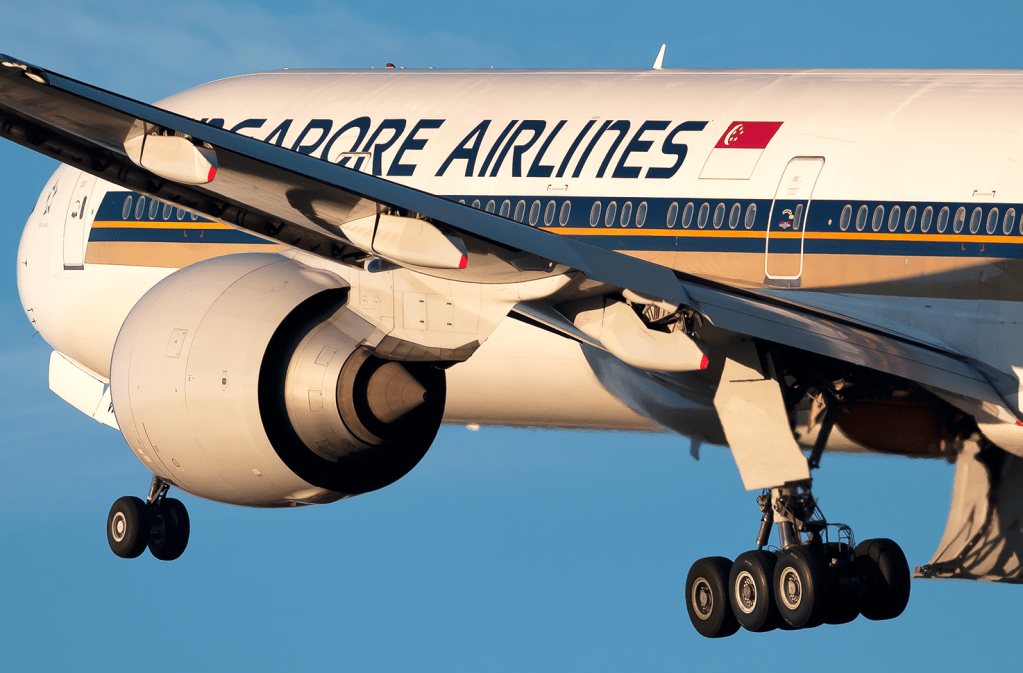
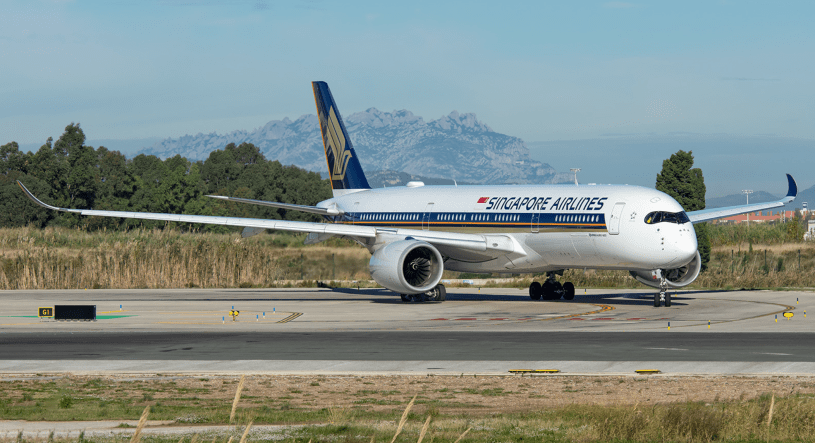
The backbone of the fleet is the Airbus A350-900, with 64 aircraft in service, including seven ultra-long-range (ULR) examples dedicated to some of the world’s longest non-stop flights, including services to New York and Los Angeles. Following closely is the Boeing 777-300ER, with 22 aircraft, which will eventually be replaced by the next-generation 777-9. The widebody fleet is completed by 28 Boeing 787-10s and 12 active Airbus A380-800s, while the Boeing 737-800 and 737-8 MAX, with 25 aircraft combined, handle shorter-haul operations.
And the premium experience does not end at the front of the cabin. Even in Economy Class, Singapore Airlines’ fleet offers a level of comfort that can be particularly appreciated from a European perspective. A passenger departing from Europe may begin a long-haul journey aboard a spacious widebody aircraft and, after connecting in Singapore, continue onto another widebody for a comparatively short regional flight. The contrast with the narrowbody experience common across Europe is striking — especially when compared with the six-hour-plus flights to destinations such as the Canary Islands often operated by airlines using Boeing 737s.
Travel classes
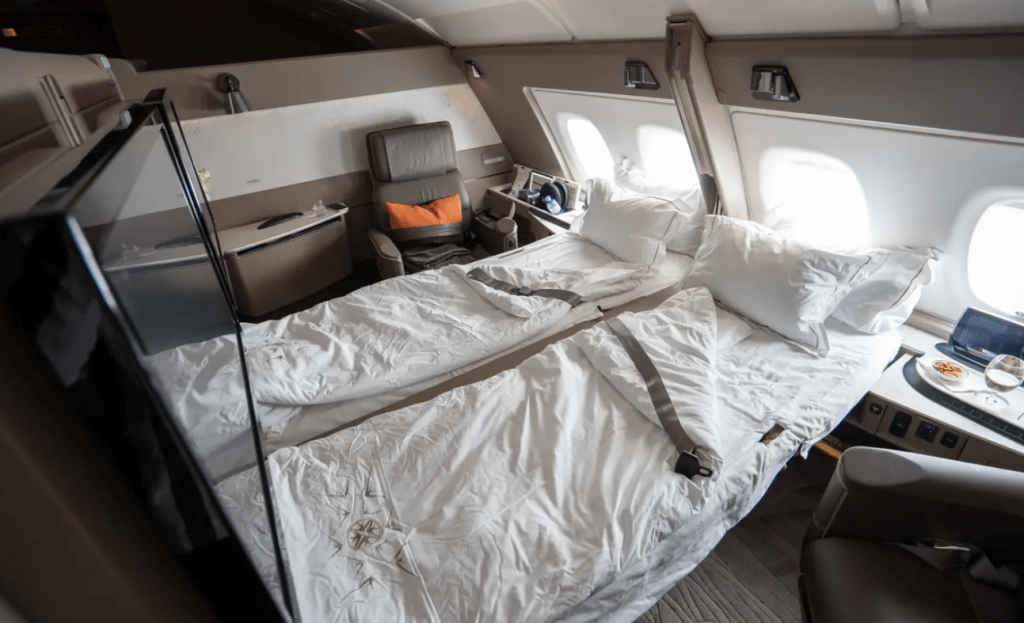
Singapore Airlines is one of the few airlines in the world to still offer four distinct classes of service on some of its largest aircraft: First Class, Business Class, Premium Economy and Economy Class. Its four-cabin A380s and Boeing 777s are reserved for selected premium-heavy routes, typically linking major international hubs and high-demand destinations. These include Star Alliance gateways such as Frankfurt, as well as key Australian markets such as Sydney and Melbourne and services to the United States, including New York via Frankfurt and Los Angeles via Tokyo.
At the very top of the hierarchy sits First Class, where Singapore Airlines delivers one of the most exclusive experiences in commercial aviation. The A380 features just six private Suites on the upper deck, creating an exceptionally intimate cabin, while selected Boeing 777s offer an equally exclusive First Class configuration, with an extra-wide seat in a dedicated mini-cabin of just four seats. With such remarkably low seat counts, the emphasis is unmistakably on space, privacy and exclusivity.

When it comes to seat width, Singapore Airlines stands apart from much of the competition with its exceptionally spacious Business Class seats. Measuring 28 inches (71 cm) wide, these seats rank among the widest in the industry and are available on selected Airbus A350 and Boeing 777 aircraft — offering passengers a level of personal space that is particularly noticeable on long-haul flights.
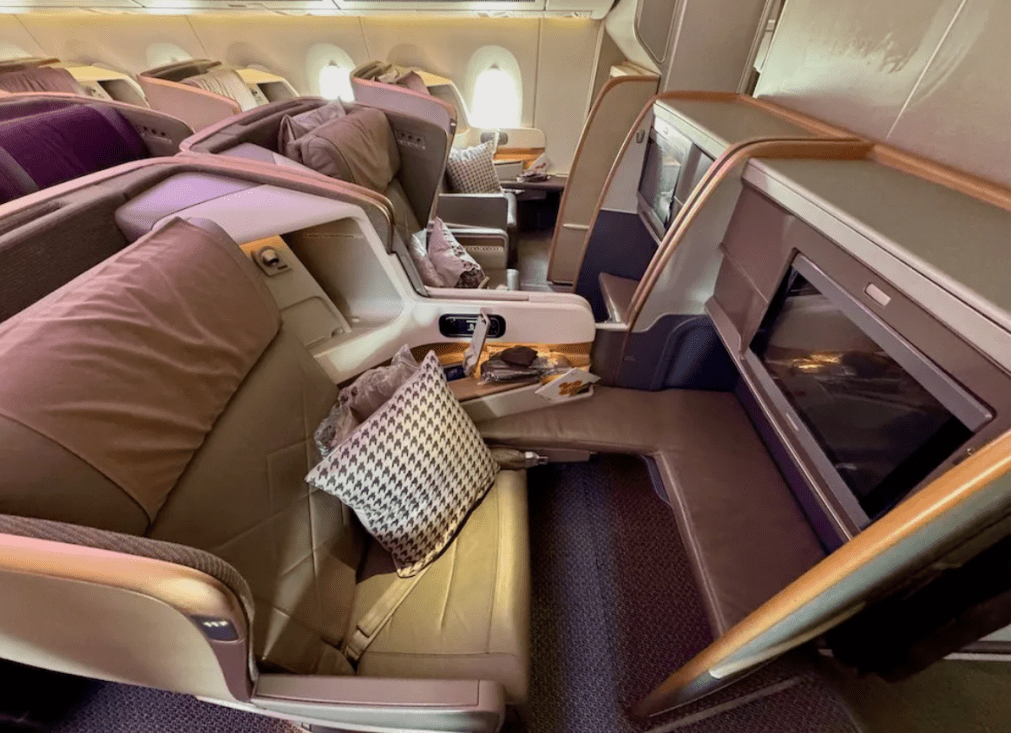
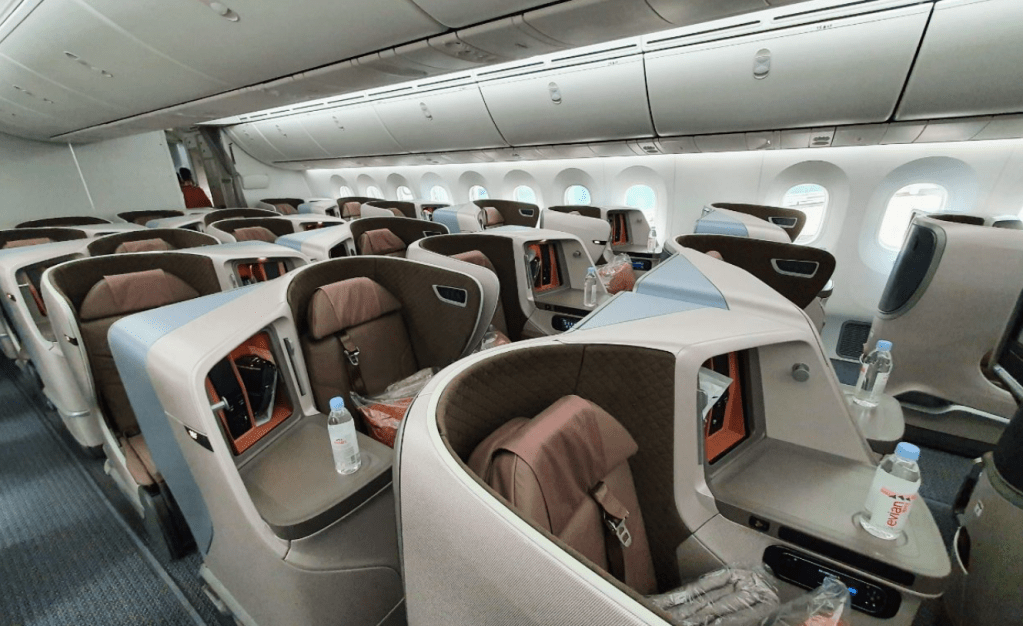
Even on its regional aircraft, including the Boeing 787s and regional-configured Airbus A350s, Singapore Airlines maintains its distinctive 1-2-1 staggered Business Class layout. This configuration gives every passenger direct access to the aisle, while the fully reclining seats transform into lie-flat beds — bringing a long-haul level of comfort to shorter regional services.
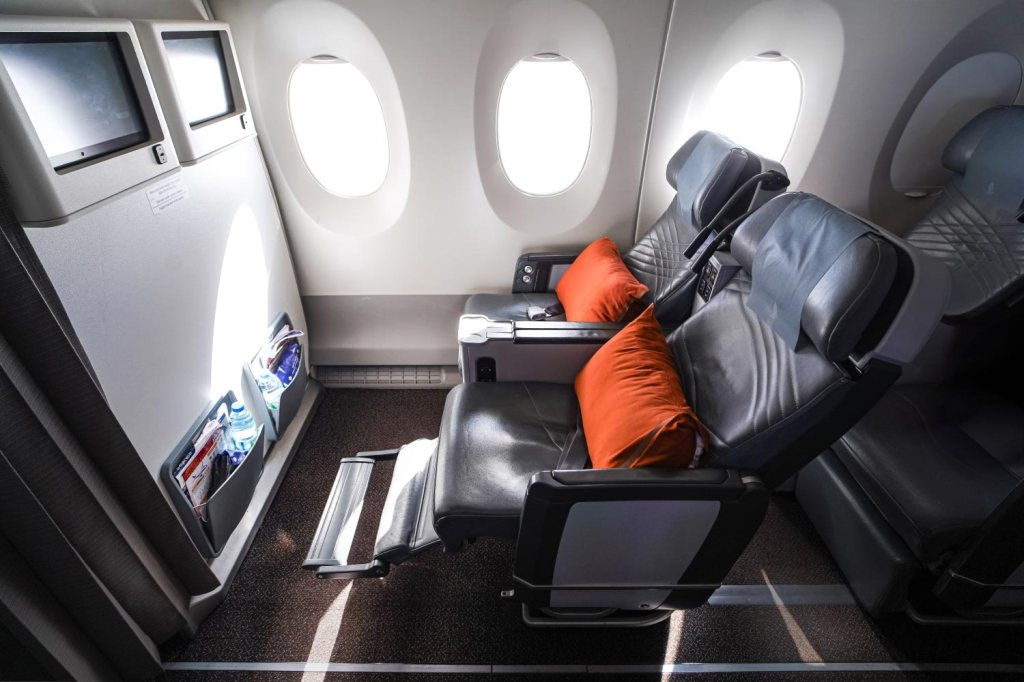
What’s more, Singapore Airlines also offers Premium Economy on its widebody aircraft operating long-haul services. The cabin is arranged in a spacious 2-4-2 configuration, while each seat is equipped with both a leg rest and a footrest, adding an extra layer of comfort and support on longer journeys.
Routes network
Taking Singapore Airlines’ fleet and onboard service into consideration, its strategy becomes clear: the airline positions itself as a global connector, building an extensive air bridge between the West, the Far East and Oceania.
For a large proportion of its passengers, Singapore is not the final destination but a gateway to somewhere else. Even on the airline’s ultra-long-haul 18.5-hour service between New York and Singapore — operated eastbound or westbound depending on prevailing winds — a significant number of passengers continue their journey beyond Changi, connecting onward to destinations across India, Indonesia and the wider region.
For travellers departing from Europe or the United States, Singapore Airlines therefore offers an exceptionally efficient gateway to South-East Asia and Oceania. With carefully timed connections through Singapore Changi Airport, consistently ranked among the world’s leading aviation hubs, the airline effectively turns Singapore into a strategic bridge between continents.

Bottom line
As previously discussed, Singapore Airlines has long played a defining role as a full-service global carrier, repeatedly pushing the boundaries of what is possible in commercial aviation. While the airline has faced criticism over the past decade for the lack of a comprehensive cabin refresh — particularly in First and Business Class, where some products are beginning to show their age — its greatest strength remains remarkably intact: consistency. Singapore Airlines may not always offer the newest product, but it almost never underdelivers.
That said, the case for a significant cabin renovation is becoming increasingly compelling. Competitors have steadily narrowed the gap, particularly in terms of onboard technology and cabin design, making some of Singapore Airlines’ older products less distinctive than they once were. Yet the airline continues to benefit from a strategy built around consistency: few, if any, global carriers can deliver such a consistently high standard of service and product quality across such a diverse fleet.
The delays affecting the delivery of new-generation aircraft have only reinforced this advantage. As airlines are forced to keep older aircraft in service for longer than originally planned, passengers can increasingly encounter significant differences between newer and older cabins within the same fleet. Singapore Airlines, by contrast, has managed to keep even some of its ageing aircraft — including its Boeing 777s — remarkably competitive with much newer types such as the Airbus A350 and Boeing 787. In an industry where fleet age can often translate directly into an uneven passenger experience, that consistency remains one of Singapore Airlines’ most valuable assets.